In our complex, information-rich, culturally diverse world, literacy is no longer just knowing how to read and write. Students need to understand and be proficient in Five Essential Literacies to be successful in our global society:
- Reading and Writing (the original literacy)
- Content/Disciplinary Literacy (content & thinking specific to a discipline)
- Information Literacy (the traditional library curriculum)
- Digital Literacy (how and when to use various technologies)
- Media Literacy (published works—encompasses all other literacies)
School Librarians can strive to integrate at least one Essential Literacy component into any class visit to the library, and I’m addressing each literacy as a separate blog post to offer insight and suggestions about how we might do that. Previous blog posts covered reading, content/disciplinary literacy, information literacy, and digital literacy, so this final post of the series looks at Media Literacy.
DEFINING MEDIA LITERACY
Media literacy during the last half of the 20th century focused primarily on print and television advertising, but in the 1990s the growth of computers and the Internet spurred the appearance of educational organizations which pushed for an expanded teaching of media literacy, along with digital citizenship.
After introduction of the iPhone (in 2007) and Android phones (in 2008)—when teens and children gained ready access to social media—media literacy became an even larger issue for educators. Then the “fake news” epidemic thrust news literacy into the spotlight, with organizations like the News Literacy Project pushing its importance as part of media literacy.
By now media literacy has become an accepted and necessary ‘essential’ in the literacy spectrum. Here are some recent definitions:
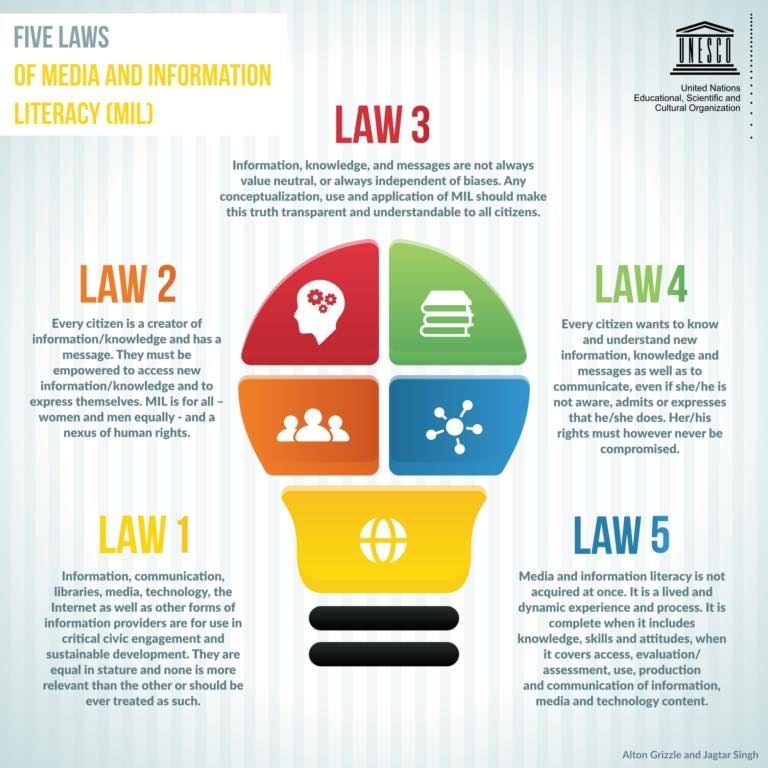
click to enlarge
- Media literacy is the ability to identify different types of media and understand the messages they’re sending. Common Sense Media
- Media literacy encompasses the practices that allow the media consumer to access, critically evaluate, and create media to improve their communication effectiveness. Wikipedia
- Media Literacy is the ability to access, analyze, evaluate, communicate and create using all forms of communication. Natl. Assoc. for Media Literacy Education (NAMLE)
- Media & Information Literacy is the ability to identify, understand, interpret, create, communicate, and compute, using materials associated with various contexts. (UNESCO 2006)
Media is just one of 5 specific literacies defined by our National School Library Standards:
Media literacy is a framework to access, analyze, evaluate, create and participate with messages in a variety of forms—from print to video to the Internet. Media literacy builds an understanding of the role of media in society as well as essential skills of inquiry and self-expression necessary for citizens of a democracy.
So, by definition, School Librarians are intended to teach students the ability to comprehend and interact with all forms of media. I believe it’s important we take on this responsibility because media literacy encompasses all other literacies—either by type of material or skills needed:
- reading literacy skills for printed media,
- disciplinary literacy for visual representations to place them in context,
- information literacy for analyzing information, and
- digital literacy because so much media is now presented online.
Because we always have students using or producing media products in a multitude of forms—as print, audio, video, or graphics presented through books, newspapers, magazines, social media, games, radio, television, videos or movies—some aspect of media literacy really needs to be incorporated into all our Library Lessons.
HOW TO INTEGRATE MEDIA LITERACY
School Librarians may question the need for specific “media” literacy lessons, since our Info-Lit lessons covering source evaluation have students deciphering the reliability and bias of sources. However, no form of website evaluation analyzes the purposefulness of the topic or issue that media literacy does. Additionally, many students lack a well=rounded knowledge of subject matter that sifting for correct information requires. A particularly interesting article explaining this is Yes, Digital Literacy. But Which One?
 Integrating media literacy can be a 5 minute “media moment” or an entire unit, depending on the purpose of the library visit. When creating my Library Lessons, I focus on these three aspects of Media Literacy:
- Media Messages – including celebrity endorsements and ads that persuade us to act or purchase
- Media Forms – the media products listed above, along with signs on businesses and billboards on the highway
- Media Footprint – personal communication and using social media
The breadth of media literacy makes it all the more important to integrate it with classroom content—with the standards and objectives the teacher is using for a unit—and to coordinate our Library Literacy Lessons with classroom activities. We need to not only teach students how to analyze media, but also how to effectively and ethically communicate their own narratives through various forms of media.
Media Literacy Through a Persuasive Book Talk
One simple way School Librarians can integrate media literacy is in a Library Lesson on student-created booktalks. Whether written book reports, oral book summaries, podcast book reviews, or video booktrailers, these are all persuasive media forms.
 With my 6th grade ELA students studying persuasion, I introduce 3 Key Questions about Media Messages:
- Who created this message?
(Concept: All media messages are constructed.) - Why is this message being sent?
(Concept: Media messages are designed for influence or profit.) - How does this message attract my attention?
(Concept: Media messages use creative techniques to attract attention.)
Students more deeply understand those 3 media concepts by creating their own “media message”: a persuasive booktalk given as a graphic preview poster, a graphic booktalk brochure, or a timed booktalk slideshow. I integrate the media literacy component with ELA concepts studied in the classroom: the tone and mood of their book will influence their choice of a persuasive appeal (logical, emotional, ethical) and guide their product choice.
RECOMMENDED ONLINE RESOURCES
As I incorporate media literacy into more student lessons, I’m curating online sources that provide ideas and guidance. Here are a few that I recommend that can help you construct your own Library Literacy Lessons.
Civic Online Reasoning or COR uses everyday digital content, the COR paper, and online assessments to engage learners in credibility decision-making around three COR Competencies: Who’s behind the information? What’s the evidence? What do other sources say? The free assessments include Google Docs assessments to copy and digital rubrics to download. These tasks are perfect for learning across the curriculum and especially for librarian-led learning.
Common Sense Media‘s News & Media Literacy Resource Center equips students with the core skills they need to think critically about today’s media. Classroom-tested lessons and teaching materials help students become smart, savvy media consumers and creators. Lesson plans on everything from fact-checking to clickbait headlines to fake news.
Project Look Sharp is a media literacy initiative of Ithaca College that develops and provides lesson plans, media materials, training, and support for the effective integration of media literacy with critical thinking into classroom curricula at all education levels, including integration with the new Common Core standards.
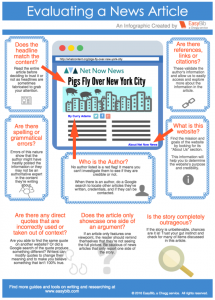
In an EasyBib blog post 10 Ways to Spot a Fake News Article, Michelle Kirschenbaum states, “You want to be informed, but a good deal of the information out there is incorrect or biased. Here are some things to keep an eye out for when reading a news article.” The infographic at right was created from the article.
The National Association for Media Literacy Education sponsors a yearly Media Literacy Week in the U.S. and Canada during the first full week of November. They have events and resources that can help introduce media literacy to your students early in the school year.
Feel free to suggest other resources I can add to this list!
This concludes my series of blog posts on the 5 Essential Literacies for Students. I invite readers to offer comments and suggestions about any or all of these literacies.

Updated 2026.