In our complex, information-rich, culturally diverse world, literacy is no longer just knowing how to read and write. Students need to understand and be proficient in multiple literacies to be successful in our global society. Our responsibility as School Librarians is to inculcate these Five Essential Literacies into our students:
- Reading and Writing (the original literacy)
- Content/Disciplinary Literacy (content & thinking specific to a discipline)
- Information Literacy (our library curriculum)
- Digital Literacy (how and when to use various technologies)
- Media Literacy (published works—encompasses all other literacies)
Previous blog posts covered Reading Literacy and Content Area/Disciplinary Literacy, so this post looks at Information Literacy, with examples and suggestions about how we might best teach these skills to our students.
DEFINING INFORMATION LITERACY
In its new National School Library Standards for Learners, School Librarians, and School Libraries, the American Association of School Librarians (AASL) defines information literacy as “knowing when and why information is needed, where to find it, and how to evaluate, use, and communicate it in an ethical manner.” (p 277)
This literacy is most often called upon when students have a research assignment of some kind and duration, so School Librarians attempt to embody that definition into our Library Research Lessons. However, info-lit prepares students to make adult decisions, from choosing a movie to buying a house, so to fully prepare students for their future, School Librarians focus on these 3 Components of Information Literacy:
- Planning Process – various models that guide students step-by-step through a research, design, or problem-solving project.
- Search and Evaluation – skills that help students find, access, and evaluate resources in a variety of formats.
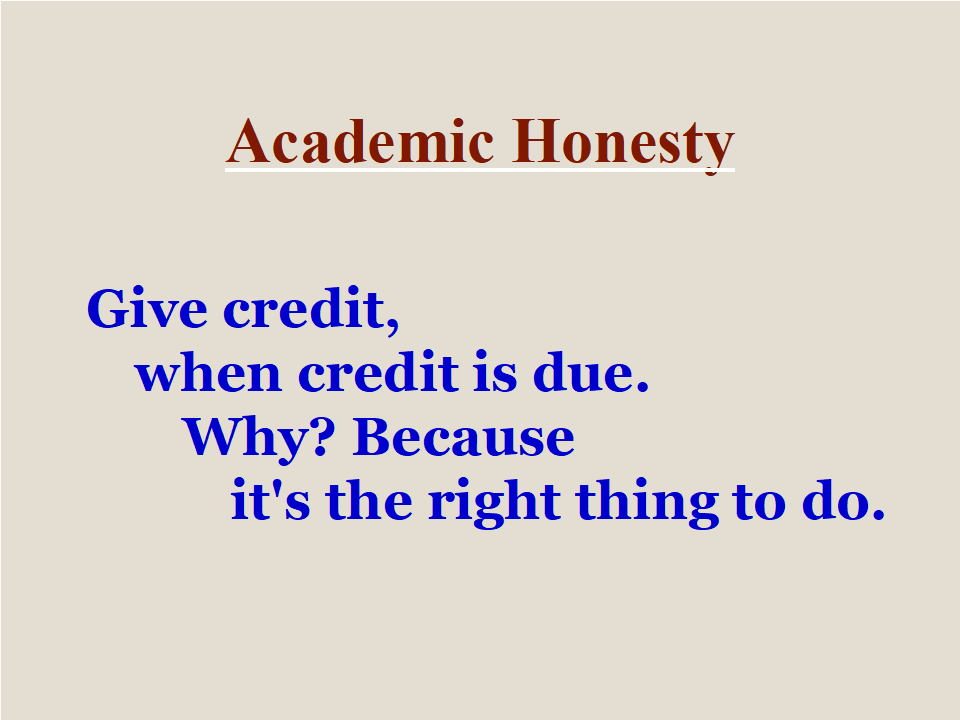
- Academic Honesty – builds respect for, intellectual property, copyright, and fair use when using information, creating work products, and presenting results.
INTEGRATING INFORMATION LITERACY
 School Librarians face several obstacles to teaching Information Literacy Components to our students:
- The Information Literacy curriculum is often embedded into subject curricula, but not identified as taught by the School Librarian.
- Class library visits are arbitrary and haphazard, making consistency and continuity of lessons difficult.
- Teachers are ignorant about collaboration with a school librarian or have had negative experiences.
To overcome these obstacles, our Information Literacy lessons need to be short purposeful chunks that provide only what students need for the assignment. By not overwhelming students with too many or irrelevant details, our lessons can encourage teachers to collaborate often, which allows us to scaffold Info-Lit skills for each grade level throughout the school year. I’ve written about my Library Curriculum Matrix, a visual organizational tool I created to plan and track my lessons, but let’s look at some specific strategies I use for each Information Literacy component.
THE PLANNING PROCESS COMPONENT
I’ve used many Planning Process Models, and each has its benefits and flaws, but all can achieve our goal to develop a problem-solving, critical thinking mindset in students. Some models have more steps, some fewer, but all planning process models follow four basic phases: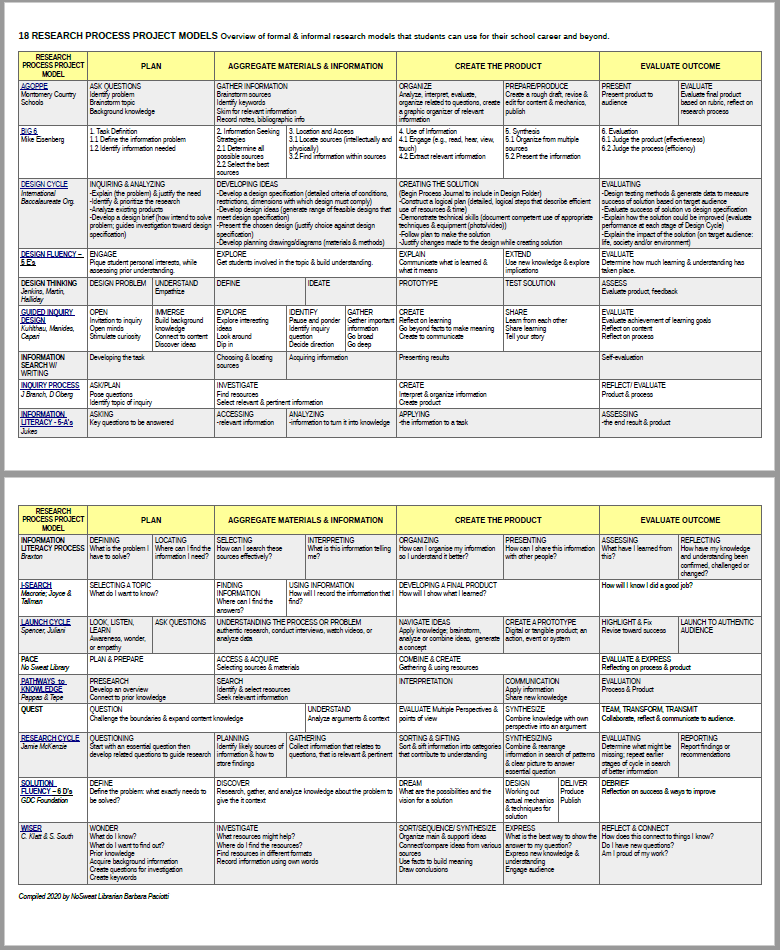
- plan
- aggregate materials and information
- create a product
- evaluate outcome.
As an aid to School Librarians, I have a FREE chart of planning process models you can download from my Librarian Resources page. You can choose a model most suited to grade level, subject, and assignment. I use just two simple models for 6th graders and scaffold the planning process throughout the school year. During 7th and 8th grades I present more models, so before they leave our campus, students have learned how to use a variety of planning processes. To make the process clear and understandable, give students an infographic of the model.
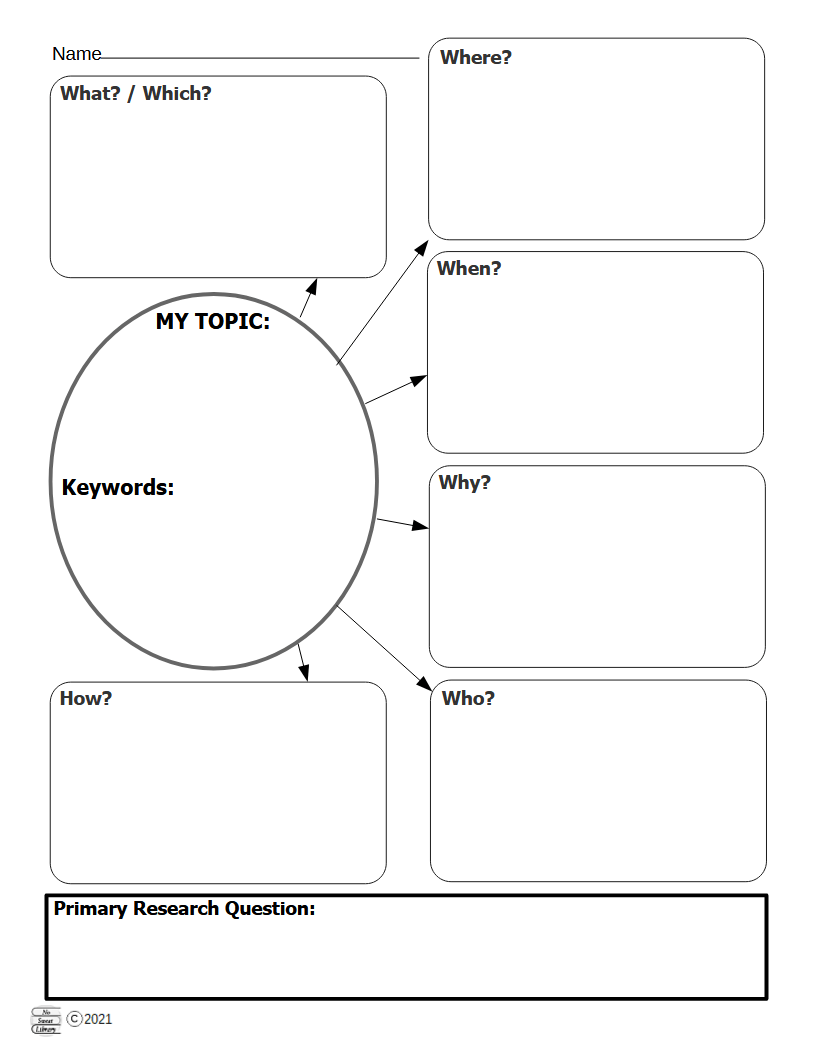
Teachers rarely include planning as part of a research assignment—students usually have a single topic, gather the same information, and regurgitate the same product. School Librarians can change that by showing teachers quick planning strategies that we can incorporate into a library visit. Brainstorming with Post-It® Notes, a Thinking Map Circle©, or a KWHL chart stimulates students to think in terms of problem-solving, and they are quick, easy ways to begin a project.
Free download by joining my e-Group!
Use a graphic organizer to help students formulate questions for research. Questions also help students sift through resources for specific information, and because they require analysis and decision-making, they form that problem-solving mindset. Here are 4 graphic organizers I’ve used to generate questions:
- the W section of a KWHL chart
- the Q-chart Question Builder
- the Britannica Pre-Research Planner
- my own 6-Question Topic Planner which is a FREE download for joining my e-Group mailing list.
The plan phase of a Planning Process Model is followed by the aggregate materials & information phase, and we can move seamlessly into the Search & Evaluation component to present resources students can use for their assignment.
THE SEARCH & EVALUATION COMPONENT
We need to teach students 3 different elements of this Info-Lit component: source selection, search strategies, and resource evaluation.
Source selection
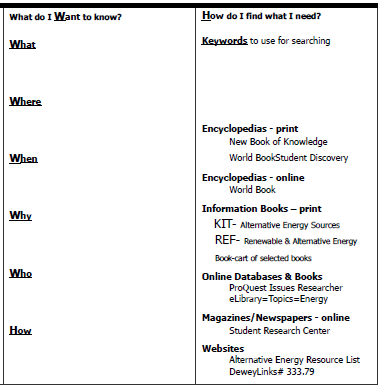
Source selection may be proscribed by the teacher, the grade level, or the assignment. Based on the type of resources students need, we may offer a selection of library materials or a Resource List of online sources. A KWL chart can be expanded by adding How (as shown at right) to make a KWHL chart listing a variety of resources.
Convince students they will “save time and find better information” by using online subscription database services and e-books provided by the state and school district. I use this 2½-minute video from Yavapai College: “What Are Databases and Why You Need Them.” If you really want to convince students, mention that they don’t have to evaluate these sources since they’ve already been approved!
click to enlarge
Search Strategies
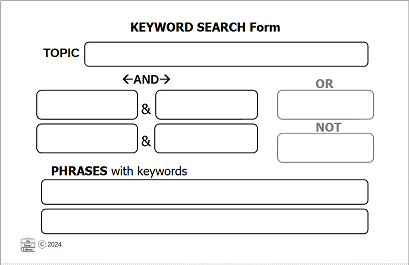
The most important lesson we can teach students about search strategies is how to generate keywords. For a brief lesson students can write keywords on a Post-It® Note. When using a graphic organizer, such as a KWHL chart, have students highlight or underline important words in their questions. For a visual way to help students master the basics, download my FREE keyword search form from the Librarian Resources page.
To reinforce the importance of keywords, remind students that they look for keywords in the index of a print source; for digital sources I provide the form in baskets at library computers .
Based on our Standards, pre-high-school students don’t need to know the term “Boolean operators”, but they need to learn what they are and how to use them. I teach search modifiers AND-OR-NOT and include them on infographics and graphic organizers, and as part of my keyword search form.
We can quickly teach students to sift top-level domain extensions when searching the free Web by typing site:gov, site:edu, or site:org into the search field of a search engine.
 Resource Evaluation
Now is a perfect segue into resource evaluation, a topic that has generated many checklists and acronyms. I want to keep things quick, easy, and memorable, so I use the simple 3-letter “ABC” acronym which I believe is enough for evaluating the quality of any resource:
- Authority — Who is the source of the information?
- Bias — Why is this published, for what purpose?
- Currency — When was this information published or updated?
You may wonder why I don’t have some of the criteria other evaluators use:
- I don’t include validity/usefulness because it’s implied when students select sources that answer the planning questions for their topic. If a source doesn’t provide answers to any questions, they don’t need to evaluate it; if it does, then they use ABC.
- I don’t include reliability because it’s part of Currency and Authority. If the resource creator has the proper authority and the resource is current, then we can accept it as reliable source of information.
- I don’t include accuracy because that takes place during the “create” phase, when students analyze and compare information after it’s been aggregated from sources. If the information isn’t accurate compared to others selected, then the source isn’t used.
Part of the aggregate materials & information phase of a research process model is extracting information from chosen sources, and that’s when we discuss with students Academic Honesty guidelines along with note-taking skills.
THE ACADEMIC HONESTY COMPONENT
It’s important to give students an understanding of, and respect for, intellectual property and fair use so they legally access and ethically use information and media, and properly cite copyrighted text, images, music, and video to avoid plagiarism or piracy when producing their end product. For years I struggled through these lessons, but as soon as I began to use the phrase “academic honesty,” students became more positive toward these lessons—I believe it empowers students to meet high standards and builds their self-esteem.
A previous blog post about how I teach Academic Honesty includes examples and resources, but here’s a quick overview of the 3 conceptual elements of Academic Honesty, organized in the order that best complements the problem-solving mindset we’re trying to implant in students:

Get the entire unit from No Sweat Library, my TPT store.
- Intellectual property – creations of the mind that belong to the originator or other designated owner.
- Citation
- Bibliography
- Copyright – legal rights given to owners of creative work so it can’t be used or stolen by others.
- Note-taking by quoting/paraphrasing, in-document citation
- Note-taking by summarizing
- Fair Use – limited legal use of copyrighted material.
- Public domain – works whose intellectual property rights/copyrights are expired, given up, or excluded.
- Creative Commons
- Plagiarism – presenting someone else’s words, ideas, or creative expressions as one’s own. An ethical (not a legal) issue of academic dishonesty/fraud.
This conceptual separation of Academic Honesty can allow us to incorporate a short lesson on any concept throughout the school year.
| You can find the individual Academic Honesty lessons at No Sweat Library, my TPT store. | |||
 |
 |
 |
 |
WHAT’S NEXT?
Planning process models, search and evaluation skills, and academic honesty complete the Library Information Literacy curriculum, but in our modern technological and global world students need more. Technology skills are crucial for future schooling and employment, and students also need to learn how to ethically interact with and evaluate all the media around us, so come back for Parts 4 and 5 of Essential Literacies as I offer ideas for incorporating digital literacy and media literacy into library visits.
This is the third entry in my series of blog posts on the 5 Essential Literacies for Students. I invite readers to offer comments and suggestions about any or all of these literacies.

Updated 2025.